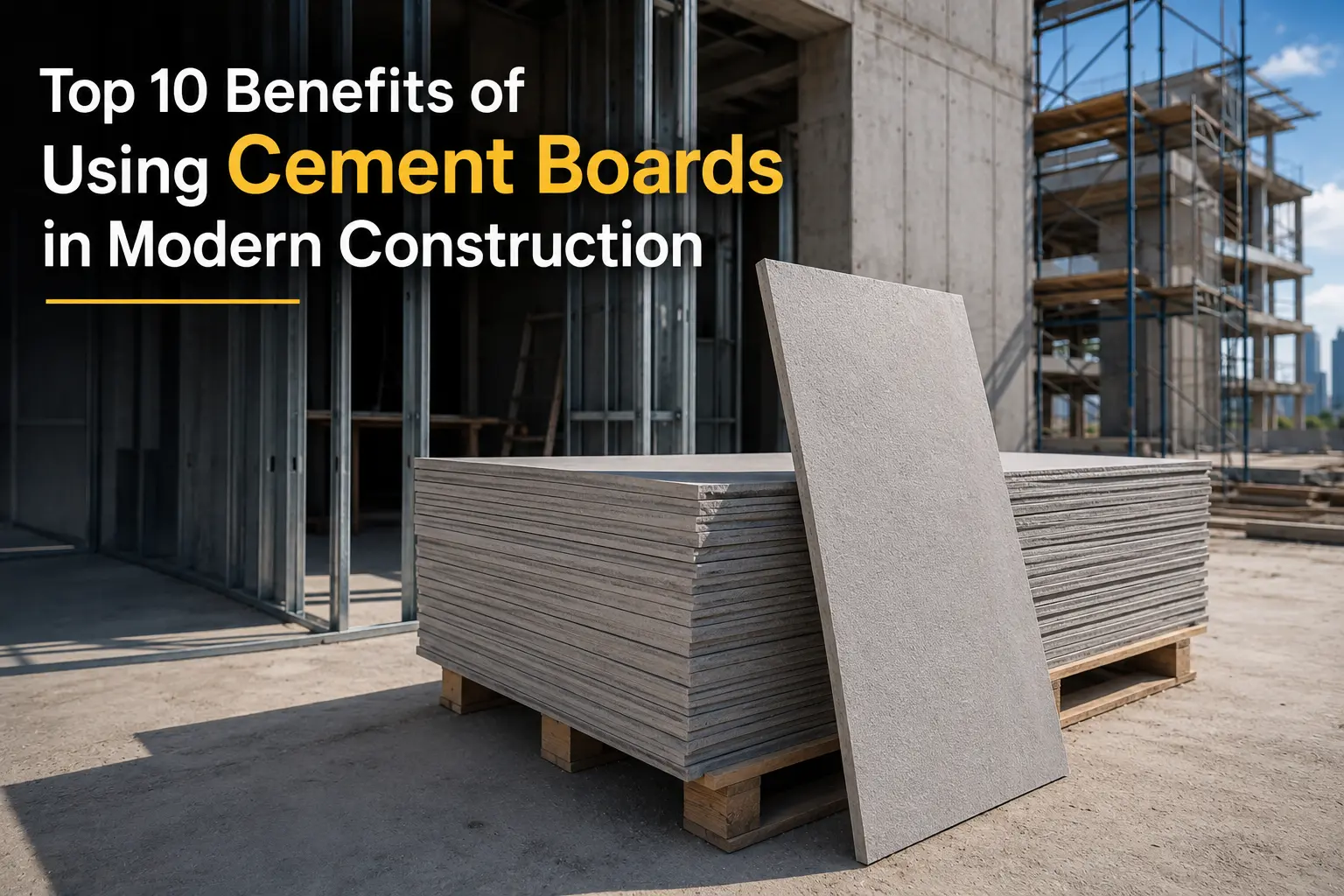
Cement boards have become a preferred building material in modern construction because they offer strength, durability, and reliable performance in demanding environments. Unlike traditional plywood or gypsum boards, cement boards resist moisture, mold, fire, and impact, making them well-suited for residential, commercial, and industrial projects. In regions with high humidity and temperature fluctuations, they provide a stable solution for both interior and exterior applications.
From wall partitions and ceilings to exterior cladding and flooring systems, cement boards deliver long-term value with minimal maintenance. Understanding their key benefits can help builders, architects, and project managers make informed material choices for lasting performance.
Outstanding Moisture Resistance
Cement board is made from a mix of cement, sand, and reinforcing fibers, so it does not soak up water the way paper-faced or wood-based boards do. This composition makes it a dependable choice for bathrooms, kitchens, laundry rooms, and any space exposed to the outdoors, where moisture exposure is constant and often unavoidable. Gypsum, by contrast, tends to swell, soften, and lose structural integrity once it comes into contact with water over time. Cement board largely avoids this problem, which is precisely why it continues to be specified so often in wet areas across residential and commercial builds throughout the region, where water damage is a persistent concern for property owners.
Strong Fire Resistance
Since cement board is mostly composed of inorganic material, it does not burn or contribute additional fuel to a fire the way timber-based products often do. Most boards in the market today carry solid, tested fire resistance ratings that meet recognized building safety standards. No material can be considered truly fireproof under every circumstance. Cement board slows the spread of fire enough to buy occupants valuable time to evacuate safely, explaining why it is so frequently specified in schools, hospitals, and high-rise buildings where occupant safety during an emergency remains the top priority for architects.
Impressive Durability and Strength
Standard drywall dents, chips, and cracks fairly easily, especially in high-traffic areas subject to daily impact and general wear. Cement board holds up considerably better under this kind of daily wear, which matters greatly in busy commercial spaces and in homes with active children or pets that place added stress on interior surfaces. Installed properly, a cement board wall or floor underlayment can last for decades without needing significant repair or attention, reducing long-term maintenance costs for owners. That extended service life is one of the main reasons contractors continue to favor it over lighter, less resilient alternatives on demanding projects.
Resistance to Mold, Mildew and Pests
Mold and termites need organic material to feed on, and cement board simply does not offer them much to work with, since its composition contains little for these organisms to break down or colonize. In a climate as humid as Dubai's, that resistance matters considerably more than people often realize, given how quickly moisture-related problems can develop indoors. Wood and paper-based products tend to break down steadily over time under these conditions, losing strength and inviting further contamination. Cement board, on the other hand, tends to remain stable and structurally sound for years, making it a dependable choice in demanding tropical and subtropical building environments.
Excellent Base for Tiling
Cement board has become the industry standard substrate beneath ceramic and porcelain tile, particularly within wet areas such as bathrooms, showers, and kitchens where reliability is essential. Its surface is rigid and dimensionally stable, so tile adhesive bonds firmly and does not shift, flex, or loosen appreciably over time under normal use. That structural reliability results in fewer cracked grout lines, fewer loosened tiles, and fewer costly callbacks down the road for contractors and homeowners alike. As a result, many tiling specialists consider cement board a near-essential layer beneath any long-lasting, professional-grade tile installation.
Dimensional Stability
Heat and humidity cause a great many building materials to expand, contract, or warp noticeably over time, particularly in climates with wide temperature swings between seasons. Cement board, by comparison, barely moves at all under these same environmental pressures, retaining its original shape and dimensions far more consistently. Walls, floors, and cladding built with it therefore stay flatter and straighter for considerably longer, which saves contractors from unnecessary rework and repeat callback visits later in a project's lifecycle. This stability is especially valuable on large builds where even minor material shifts can compound into significant structural and cosmetic issues.
Lightweight Options Without Losing Strength
Cement board is naturally denser than gypsum, which historically made it heavier and somewhat harder to handle on site during installation. However, manufacturers now produce lighter formulations that are considerably easier to carry, cut, and install without sacrificing the structural performance that makes the material valuable in the first place. On large commercial jobs where crews are working against tight deadlines and demanding schedules, that difference in handling speed adds up quickly across an entire site. Faster installation without compromising quality gives contractors a meaningful edge when timelines are already stretched thin.
Versatility Across Applications
Cement board is not limited to interior wall assemblies alone; its uses extend well beyond that single application. It shows up in flooring underlayment, roof decking, exterior cladding, soffits, and even furniture panels across a wide range of project types. Because of that broad range of applications, contractors can often standardize on a single material family across several parts of a build rather than juggling multiple suppliers and disparate products. This consolidation simplifies procurement, reduces coordination overhead, and helps ensure a more consistent standard of quality throughout different sections of the same construction project.
Eco-Friendly and Sustainable
Most cement boards are manufactured from natural, recyclable raw materials, and the manufacturing process itself tends to produce less waste than many synthetic alternatives on the market today. Since the boards last so long once installed, buildings require fewer replacements over their operational lifetime, which lowers the overall environmental footprint of a project across its full life cycle. That consideration matters more with each passing year as green building certification steadily becomes standard practice across the UAE construction sector. Specifying durable, sustainable materials like cement board therefore supports both environmental goals and long-term project economics simultaneously.
Better Sound Insulation
Cement board's dense composition also gives it reasonably strong acoustic performance when compared with lighter, less substantial building materials commonly used in partition walls. In apartment buildings, offices, and hotels, that additional soundproofing helps developers and building managers meet occupant comfort expectations without needing to add separate, costly acoustic treatments to a project. This built-in acoustic benefit is particularly useful in multi-unit residential developments, where noise transfer between units is often a leading source of tenant complaints. Specifying cement board in shared walls can therefore quietly improve overall occupant satisfaction across a building.
Choosing the Right Supplier Matters
How well cement board performs on a project depends a lot on the quality of the product itself. Poorly manufactured boards can crack early, absorb more water than they should, or fall short of their advertised fire rating. That is why it is worth working with an established supplier that stocks certified, tested products and understands local building codes.
This is also where sourcing gets practical. Contractors handling multiple trades usually need more than just boards. They need building material suppliers in Dubai who can also deliver gypsum products, plumbing fittings, and electrical components without delays. Sticking with fewer, more reliable suppliers reduces coordination challenges and keeps a project on schedule.
The Long-Term Benefits of Using Cement Board
Cement board has earned its place in modern construction because it solves problems contractors deal with, including moisture damage, fire risk, mold, and general wear. Whether the project is a residential villa, a commercial fit-out, or a large-scale development, specifying the right cement board from the right supplier pays off in fewer callbacks and a structure that lasts.
At Service First, we are committed to supplying high-quality building materials to contractors, developers, interior designers, and homeowners across Dubai. From premium cement boards and gypsum products to a comprehensive range of construction essentials, we provide reliable solutions for residential, commercial, and industrial projects of all sizes. Contact us today to discuss your project requirements, and our experienced team will help you choose the right materials at competitive prices to ensure a durable, efficient, and successful build from start to finish.